BlogGuides
How to build built-in bookshelves in an alcove
Measure an alcove that isn’t square, choose the material, space the shelves and fix them to the wall: a practical guide to built-in alcove bookshelves.
 Illustration
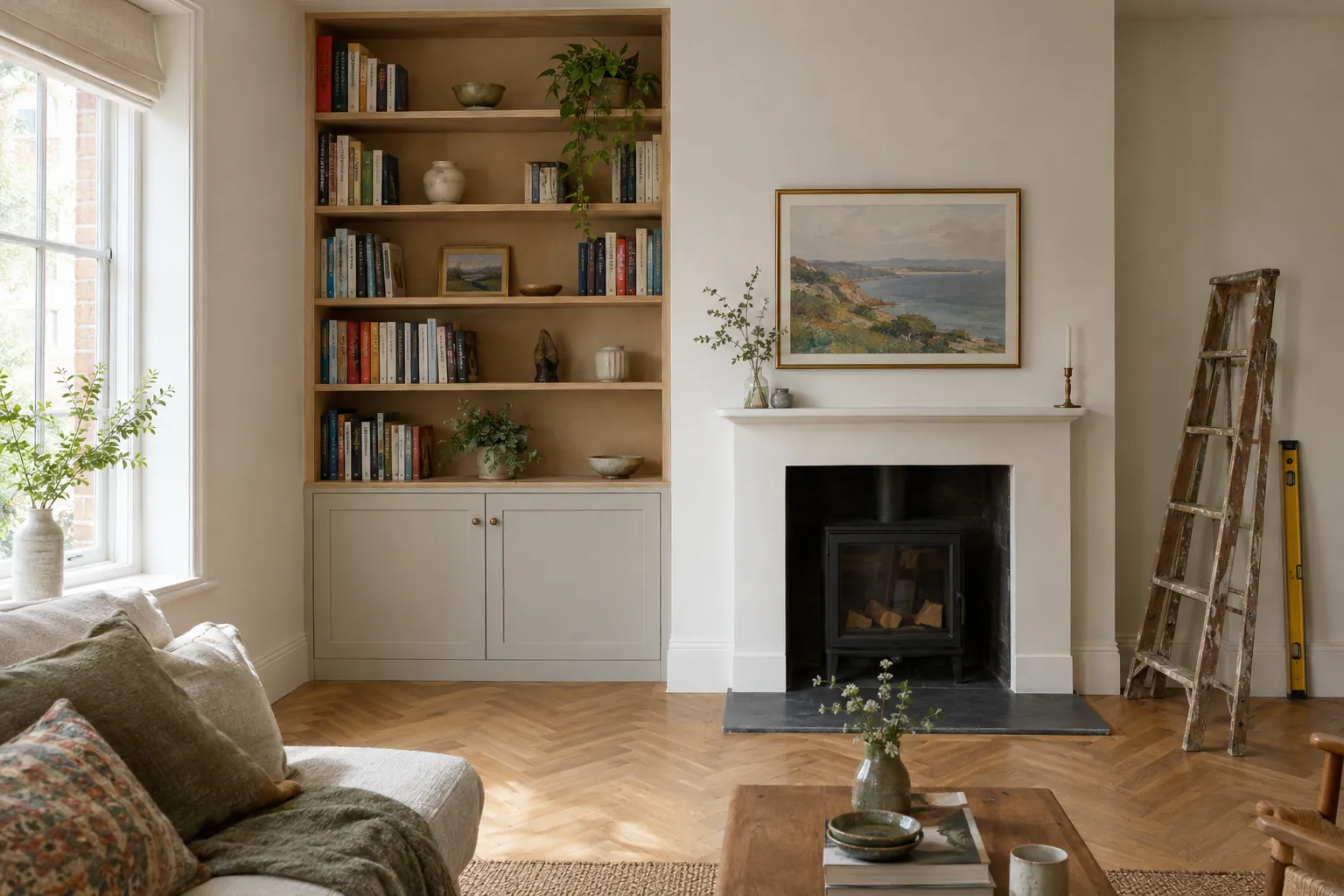
The alcoves either side of a chimney breast are the classic place for bookshelves. A freestanding bookcase never quite fits: it comes in a fixed width, leaves a gap at the side and stops short of the ceiling. Shelves built into the alcove become part of the room instead.
This guide covers the decisions that matter: measuring, layout, material, how to build it and how to fix it safely.
Measure the alcove three times
Old walls are rarely square or plumb, so one measurement is never enough.
- Width: measure at the top, the middle and the bottom, at the front and at the back. Plan the shelves to the smallest width and close the remaining gaps with a scribed edge.
- Depth: measure the depth of the chimney breast on each side. They are often different.
- Height: measure floor to ceiling at both ends, and check the floor with a level.
- Skirting: note the skirting board’s height and thickness. You can cut it away or notch the shelves around it.
Write every measurement on a sketch of the wall. When something doesn’t fit later, the sketch tells you why.
Decide what goes where
The most useful layout is a cupboard below and open shelves above.
- Base cupboard: 300 to 400 mm deep (12 to 16 in), up to the depth of the chimney breast. A top at 750 to 900 mm high makes a handy surface for lamps and display.
- Shelf depth: 250 to 300 mm (10 to 12 in) is plenty for most books.
- Shelf spacing: about 300 to 330 mm (12 to 13 in) between shelves for hardbacks, 230 to 250 mm (9 to 10 in) for paperbacks. Leave the top shelf taller for objects.
If the shelves are adjustable, drill a row of shelf-pin holes in the sides so you can change the spacing later.
Choose the material
Plywood, 18 mm (¾ in). Strong, stable and good-looking at the edges, especially birch or oak-veneered ply. The best choice for shelves that will carry books.
MDF. Smooth and easy to paint, but heavier and more prone to sag. Use it for painted cupboards and lip the front of shelves with hardwood.
Books are heavy: a full shelf of hardbacks can weigh 20 kg or more. As a rule of thumb, keep 18 mm shelves to around 700 to 800 mm (28 to 31 in) between supports. For wider alcoves, use thicker material, glue a hardwood strip under the front edge, or add a central divider.
Two ways to build it
Shelves on battens. Each shelf rests on battens screwed to the three alcove walls. It is quick and uses little material, but the walls must be sound and every shelf has to be cut to the alcove’s exact, often uneven, shape.
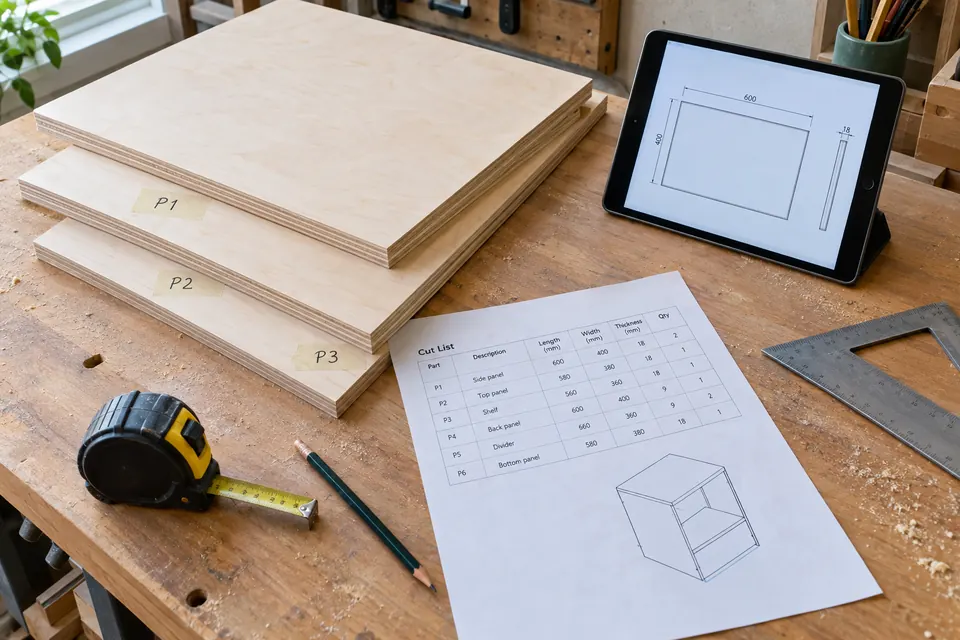
A carcass. Build a box of sides, top, bottom and shelves, slide it into the alcove and scribe it to the walls. It takes more material, but it is square however crooked the walls are, it can be made in the workshop, and it is easy to make from a cut list.
For most homes, a carcass base with a carcass of shelves on top gives the cleanest result.
Fix it to the wall
Tall shelving must be anchored so it can never tip. Screw through a fixing rail at the top of the carcass into the wall, with fixings that suit the wall: plugs and screws for masonry, cavity fixings for plasterboard. Use a detector to check for pipes and cables before you drill.
Finish it
Fill and sand the joints, then prime and paint in a hard-wearing satin or eggshell. For veneered plywood, use a clear oil or lacquer. Paint the inside surfaces before assembly, when you can still reach them easily, and caulk the scribe gap to the wall for a built-in look.
Plan it before you cut
Most mistakes happen between the tape measure and the saw. In Caminu you give the alcove’s size and say what you need, for example “bookshelves for a 1,040 mm alcove, cupboard below, five shelves above, in birch”, and get a 3D model, a cut list and an illustrated assembly guide made for those measurements. You can start from our alcove bookshelves plan or design your own.